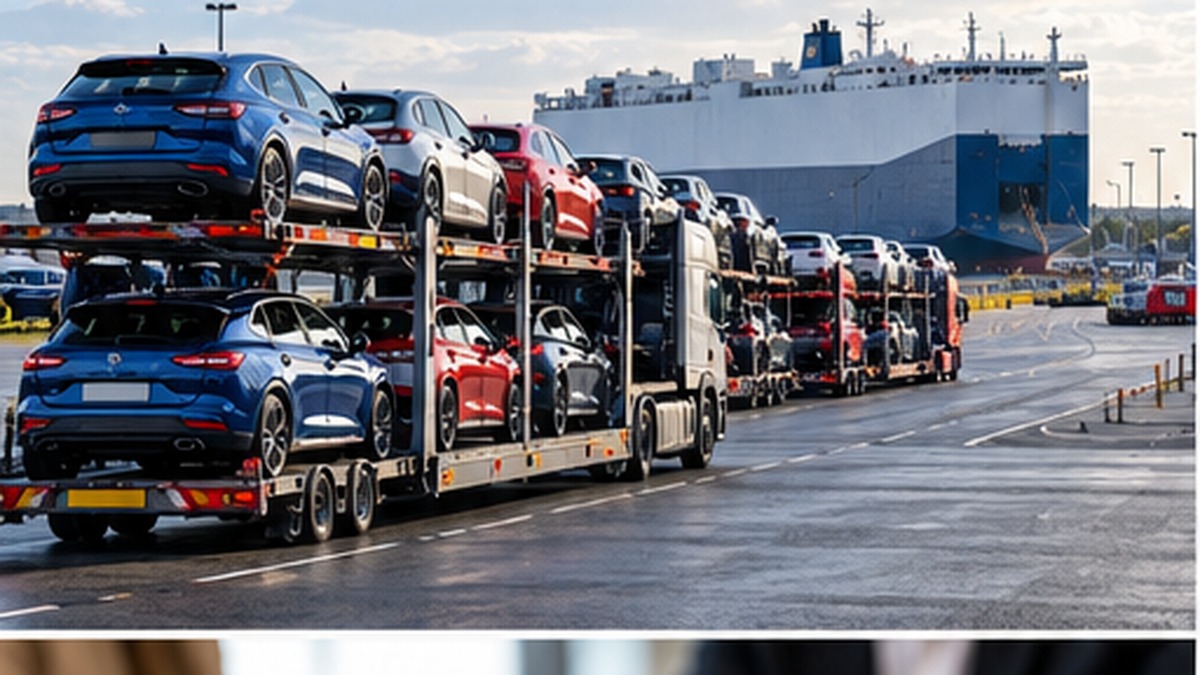
The UK and European automotive industries remain closely linked through vehicle sales, component supply, manufacturing and investment, even years after Brexit changed the formal trading relationship.
New analysis commissioned by SMMT has put a number on that interdependence, estimating the annual UK-EU automotive trading relationship at around €80 billion.
UK production supports economic activity across Europe
According to the analysis, UK automotive production supports around €24 billion of economic activity in the EU and approximately 250,000 jobs across the bloc through supply chains and wider spending.
UK automotive exports to the EU alone are estimated to generate €5.6 billion of spending on EU goods and services, supporting around 58,000 jobs and €1.6 billion in tax revenues.
Cars are built across borders
Modern vehicle manufacturing rarely happens entirely within one country. Components can cross borders several times before a finished car reaches a showroom.
A UK-built vehicle may contain parts manufactured in Germany, France, Spain, Italy or elsewhere, while European-built cars sold in Britain rely on UK dealers, logistics, finance and service networks.
Why 'Made in Europe' proposals have caused concern
SMMT has warned that proposals being discussed within the EU's Industrial Accelerator Act could create disadvantages for UK-built vehicles if future incentives or procurement rules favour products classified as 'Made in Europe' without recognising UK production as equivalent.
These proposals are not the same as a final ban on UK cars. The concern is about future competitiveness and whether UK-built vehicles could be excluded from certain incentives available to EU-produced products.
Why consumers should care
Trade policy can eventually affect vehicle prices, model availability and where manufacturers invest. Additional barriers can increase costs or reduce the commercial case for selling a particular model in a market.
For used-car buyers, the effects are less immediate, but the new-car market ultimately determines which models flow into second-hand supply in the years ahead.
The UK remains important to European manufacturers
Britain is a major market for EU-built passenger cars, while the EU remains the most important export destination for many UK automotive products.
That mutual dependence is why industry groups continue to argue for practical rules that preserve trade and investment rather than creating new barriers.
A market issue worth watching
For drivers, the debate may seem distant from choosing a car today. But decisions about tariffs, origin rules, industrial incentives and procurement can shape which cars are built where, how much they cost and how competitive the UK market remains.
As the industry moves through one of the biggest technology changes in its history, maintaining strong trading relationships is likely to remain a central issue for UK automotive.
Source: SMMT / Oxford Economics analysis, 22 September 2026.