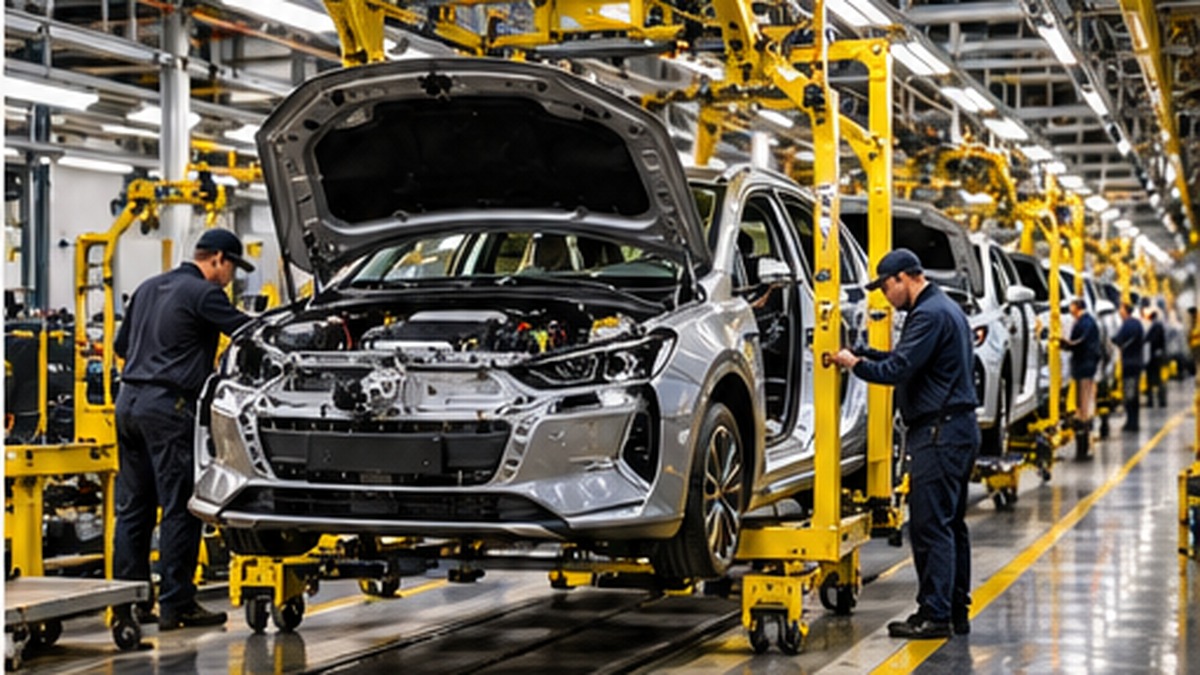
UK vehicle manufacturing recorded a welcome rise in August, with total output increasing by 5.7% to 40,872 vehicles, according to the latest SMMT figures.
Car production itself rose 6.1%, its strongest growth rate of the year to that point, while commercial vehicle output fell by 4.8%.
Why the August figures need some context
August is normally a low-volume and volatile month for UK vehicle production because factories often schedule summer shutdowns and model-change work at different times.
That means one month's percentage increase should not be treated as proof that every pressure on the industry has disappeared. Even so, growth after a difficult period is a positive sign.
£1bn of investment adds a bigger signal
Alongside the production figures, SMMT highlighted around £1 billion of new investment announced for the UK automotive sector.
Investment decisions matter because vehicle plants operate on long product cycles. Money committed today can influence where future models, batteries, components and engineering programmes are located for years.
UK manufacturing still faces intense competition
Britain is competing with manufacturing regions across Europe, Asia and North America for the next generation of automotive investment.
Energy costs, trade rules, supply-chain resilience, skills, tax policy and access to major export markets all affect whether a manufacturer chooses to build a future vehicle in the UK.
Why this matters to ordinary car buyers
Manufacturing may sound removed from the used-car market, but the effects eventually reach consumers. Strong domestic production supports jobs, dealer networks and parts supply, while high-volume models can later create a deeper used market.
UK-built cars are also a major export product, so production strength contributes to the wider economy beyond the factory itself.
The transition to electric production is central
Automotive investment increasingly includes electric drivetrains, batteries, software and manufacturing technology. The challenge for the UK is to make sure the shift to zero-emission vehicles also brings industrial investment rather than simply changing the types of cars imported.
Trade remains a major risk
SMMT has also warned about potential changes to European industrial policy that could disadvantage UK-built vehicles in the EU market. Since the automotive supply chain is deeply integrated across Britain and Europe, trade friction can create costs on both sides.
For now, the August production rise and investment announcements are encouraging. The bigger test will be whether that momentum turns into sustained output growth and a strong pipeline of future UK-built models.
Source: Society of Motor Manufacturers and Traders, 30 September 2026.